NHMRC Investigator Grant to build evidence base for drug checking services’ role in reducing drug harms in Australia
Strengthening Australia’s response to our increasingly toxic unregulated drug supply
December 2025
Teaser image
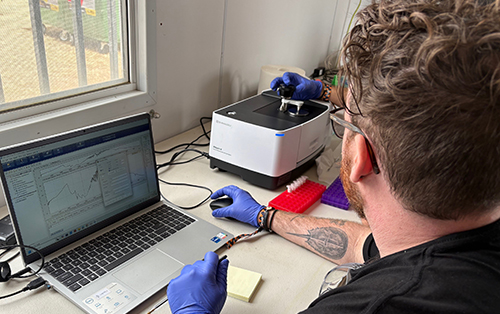
Potent synthetic opioids, including nitazenes and novel benzodiazepines, have recently been detected in Australia, and nitazenes have been found represented as heroin and in non-opioid substances, including ketamine, MDMA and cocaine.
An evidence-based way to prevent people from accidentally taking these substances is through drug checking services (DCS). While relatively new in Australia, DCS have been established for more than 50 years in 30+ countries and are rapidly scaling up in the US and Canada.
In response to our increasingly toxic unregulated drug supply, Australian jurisdictions are now also implementing DCS, first in the ACT in 2022, then in Queensland in 2024 and Victoria’s services are pending implementation. While there are other drug monitoring systems in Australia, including the Emerging Drugs Network of Australia (EDNA) and state-based drug surveillance systems with analytic capabilities, DCS uniquely provide the opportunity for individuals to reduce risk or prevent harm altogether by avoiding drug batches or adjusting their drug use practices once they understand the true contents of their drugs.
But there is still much we do not know, including the longer-term health outcomes from DCS, the effectiveness of public outputs, leveraging community experiences and reaching diverse groups.
Over the next five years, this $1.6m NHMRC-funded investigator grant research will further develop the evidence base for DCS on reducing drug harms in Australia, generating new knowledge on the effectiveness and implementation of DCS and better equipping us to rapidly identify and respond to emerging drug threats in the context of an increasingly toxic drug supply.
Across five distinct projects, including the largest follow-up study of DCS clients in the world and development of a publicly-available website displaying live drug market data, the research program aims to:
- Determine the medium-to-long-term effectiveness of drug checking on reducing drug harms
- Innovate public outputs from these services to reduce drug harms
- Understand how best to leverage community experiences of drug practices, substances and markets to mitigate toxic drug outbreaks
- Learn how best to engage with and serve diverse populations with drug checking, and
- Drive innovation in local service delivery through conducting global mapping of drug checking services and working with diverse interest groups.
Read Research Focus to find out more about this project and previous research into drug checking services.