Generations really do differ in how they drink—and Gen Z is leading the way toward a lighter-drinking Australia
Gen Z is redefining Australia’s drinking culture… and that’s a good thing
December 2025
Teaser image
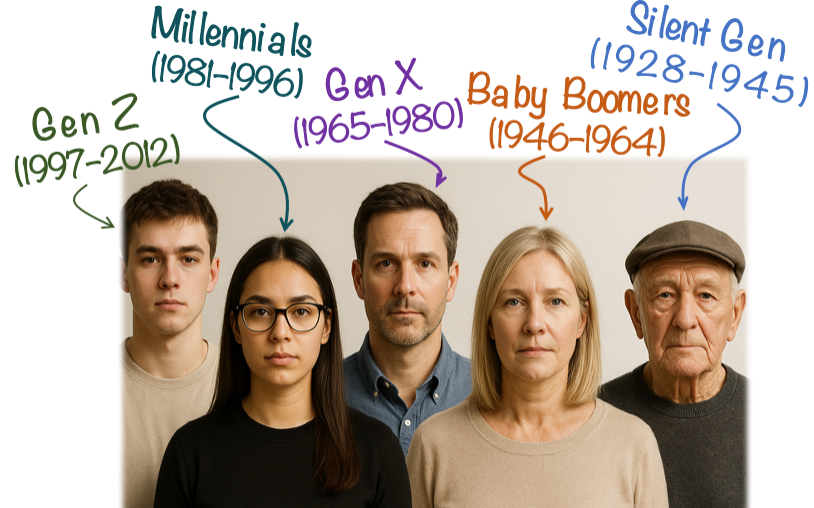
If you’ve glanced at a newspaper—or a news app—in the last few years, you’ve probably seen the headlines like “Gen Z Is Ditching Booze” or “Gen Z is the Sober Generation.” It’s become one of those widely accepted cultural truths.
This is great because we know that drinking alcohol is one of the leading risk factors for the burden of disease in Australia and is casually linked to seven types of cancer.
Most studies behind these headlines compare one group of 20-year-olds to another group of 20-year-olds a few years later—totally different people, living in totally different circumstances. While it can tell us what today’s 20-year-olds are doing, it can’t tell us whether these patterns stick as they age.
And in a country like Australia—where immigration has been steadily rising from cultures where alcohol is less common (usually for religious or biological reasons)—those comparisons get even muddier. If the newest generation in Australia drinks less, it might not just be because they’re “different,” but because Australia itself is different.
So, instead of relying on snapshots, we decided to go longitudinal.
Following Generations Across (Most of) Their Lives
We used a large-scale, long-running study—the HILDA survey—which follows people over 23 years. That gave us enough time to see how drinking patterns shift, not just for one age group, but across generations: Gen Z, Millennials, Gen X, Baby Boomers, and the Silent Generation.
We then used a statistical approach that let us compare how each generation’s drinking behaviours are predicted to vary over their lifespan.
So, What Did We Find?
1. Gen Z really is drinking less—by a lot.
Even though we only have their early-life data so far, Gen Z were predicted to be about 18 times more likely to abstain compared to Boomers over their lifetime.
Millennials and Gen X were also predicted to be more likely not to drink than Boomers.
2. Millennials were the heaviest drinkers per occasion.
They drank about half a standard drink more per occasion than Boomers. Gen Z, interestingly, matched Boomers on this measure.
3. Weekly drinking tells a different story.
The Silent Generation topped the charts, while Gen Z and Millennials were predicted to drink significantly less than Boomers over their lifetimes.
Across almost every measure, Gen Z comes out as the lowest-consuming generation. And our modelling suggests that this isn’t just a youthful phase—it’s likely to stick with them.
Why Is Gen Z Drinking Less? A Few Good Guesses
There’s no single reason why this trend has emerged, but a combination of social and economic factors seems to be nudging young people away from alcohol:
1. Alcohol just isn’t as “normal” anymore.
Young people today don’t feel the same pressure to drink to fit in—if anything, not drinking has become more normalised.
2. The rising cost of everything.
When rent, the mortgage, groceries, and basic living costs keep climbing, a $25 cocktail becomes a luxury—one that’s indulged in increasingly less frequently.
3. More time online, less time out.
Gen Z spends much more time gaming, streaming, and scrolling. So, they’re less likely to spend time at places where people usually drink—like nightclubs, bars, and pubs—than older generations.
4. Health and wellness culture.
This generation is more tuned in to long-term health than many before them. When someone’s WHOOP is telling them that their binge the night before impacted their sleep score, they’re probably going to do it less often.
So, What Should We Do With This Information?
Here’s the good news: the decline in alcohol consumption among Gen Z is a major win for future public health. Less drinking means fewer future health burdens.
But these gains won’t maintain themselves. Policymakers can leverage different factors—such as economic levers (like minimum pricing policies and volumetric taxation), social marketing, and restrictions on alcohol availability (including delivery of online alcohol purchases) and advertising—to reinforce these positive trends among Gen Z and future generations.
Although we’ve seen generational shifts, we can’t ignore that late adolescence and early adulthood are life stages characterised by low levels of abstention and high quantities of drinking per occasion, whereas late adolescence and middle age is distinguished by high volumes of drinking across the week.
The Bottom Line
Generations really do differ in how they drink—and Gen Z is leading the way toward a lighter-drinking Australia. But alcohol habits are shaped by culture, economics, and opportunity. If we want this positive trend to continue, we need policies and environments that support it. Read more here.