Prediction markets are a fast-growing way to bet on real-world events, packaged in financial language.
Prediction markets: an emerging form of gambling?
March 2026
Teaser image
Prediction markets: gambling in financial clothing?
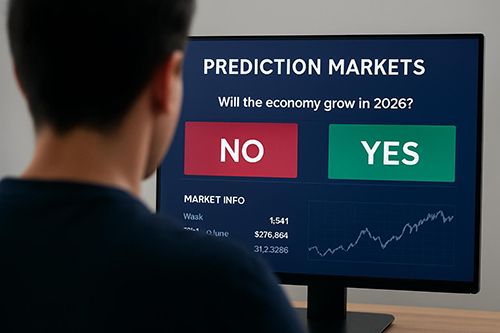
Prediction markets are a fast-growing way to bet on real-world events, packaged in financial language. They offer binary “yes/no” contracts whose prices reflect the market’s estimate that a real-world event will occur. For example, a contract priced at $0.60 is commonly interpreted as a 60% chance. Purchasing one contract pays $1 if the event occurs and $0 otherwise. These markets often focus on political and sporting events.
Why are they treated as “investing” in the US?
In the United States, prediction markets are overseen by the Commodity Futures Trading Commission (CFTC). This means they are often regulated as investments rather than gambling products. That distinction matters because harm-minimisation measures typical in gambling regulation, such as broad self-exclusion registers, advertising restrictions, and in-product safer-gambling tools, generally do not apply in the same way.
But functionally, do they behave like gambling?
Functionally, these products resemble gambling. Users stake money on uncertain outcomes that resolve in either a full payout or nothing. Short event cycles can permit repeated re-entry and loss chasing, and risk is amplified by features that define modern online wagering environments, including 24/7 mobile access, push notifications, easy deposits, and constant availability.
The blurry line between investing and gambling
The boundary between high-risk investing and gambling has long been blurry, particularly for behaviours such as day trading and margin trading. Gambling through financial markets also has a long pedigree: individuals have used traditional stock trading and, more recently, cryptocurrency trading as alternative ways to gamble. These behaviours have been linked to economic loss, mental health problems and addiction-like symptoms. This means the legal label, “investment” versus “gambling”, does not reliably describe the user experience or the risk profile.
So what changes now?
Distribution. Widely used share-trading platforms are now offering prediction markets to the broader population, most notably through integration into Robinhood, the most used stock trading app in the United States. Robinhood has been found to host users who engage in high-frequency trading, implying the presence of day traders on the platform. Prior research finds that people experiencing problem gambling are more likely to engage in day trading and that day traders are more likely to engage in other forms of gambling. Embedding prediction markets inside mass-market trading apps may therefore increase exposure among groups already at elevated risk.
What are we doing?
With little peer-reviewed literature specific to prediction markets, action is needed now. We propose a research agenda modelled on adjacent domains such as cryptocurrency: (1) characterise how users perceive and use these products; (2) quantify the prevalence and severity of harm; (3) identify product and interface features that elevate risk; (4) test safeguards for effectiveness; and (5) assess how these products are advertised. Evidence such as this would allow substantiated questions to be asked of legislators about the appropriate classification of these products and what consumer protections should apply.
Read the letter to the editor in Addiction.