The Drug Trends program began with the Illicit Drug Reporting System (IDRS) in Sydney in 1996, initially as a one year trial. In its early days, the IDRS combined surveys of people who inject drugs, interviews with experts and analysis of existing data, focusing on heroin, amphetamine, cocaine and cannabis. Following the success of this approach, the IDRS expanded to three other states in 1997 and was implemented in every state and territory by 2000.
Over time, Drug Trends has continued to evolve in response to changes in drug markets, use and harms. The program expanded to include the Ecstasy and Related Drugs Reporting System (EDRS), capturing trends among people who use ecstasy and other stimulants. It also incorporated new data streams, including indicators of population-level harms through the National Illicit Drug Indicators Project (NIDIP) and insights into online drug markets and forums through Drugs and New Technologies (DNeT).
National Collaborations and Partnerships
A defining strength of the Drug Trends program is its collaborative model. Led by NDARC, the program brings together leading research institutions across Australia, including the National Drug Research Institute (Curtin University, WA), the Burnet Institute (VIC), the University of Tasmania, and the Institute for Social Science Research at the University of Queensland.
These partnerships significantly enhance the program’s reach, expertise and responsiveness. By working across the country and disciplines, Drug Trends can identify and investigate public health priorities, while ensuring findings are relevant at both local and national levels.
The program’s network extends broadly across many institutes, including collaborations with other national centres: the National Centre for Clinical Research on Emerging Drugs (NCCRED), the National Centre for Youth Substance Use Research (NCYSUR), and the National Centre for Education and Training on Addiction (NCETA). Together, these partnerships strengthen Australia’s capacity to respond to the complex and evolving drug landscape.
“The success of Drug Trends is built on collective expertise — bringing together local knowledge, methodological strength, and policy insight from across jurisdictions” says Associate Professor Amy Peacock, current program lead for Drug Trends at NDARC.
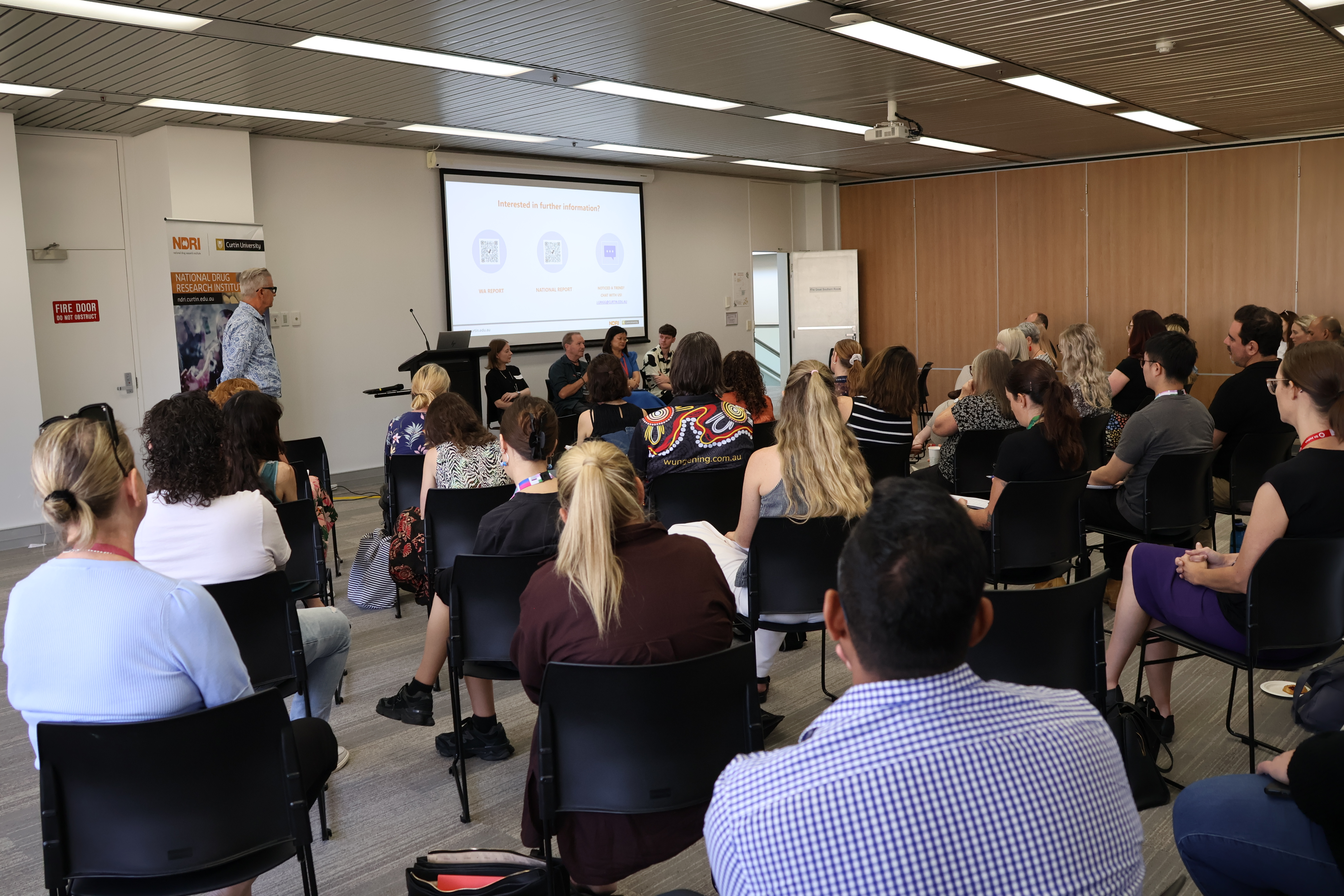
A ‘full house’ from across the alcohol and other drug sector attended a recent NDRI seminar presenting the latest findings on drug use trends in Perth.
Drug Trends into the future
Three decades on, the Drug Trends program continues to play a vital role in monitoring alcohol and other drug use in Australia. Through ongoing data collection and collaboration with partners across research, policy, practice and community, the program contributes to a better understanding of emerging issues and how they evolve over time. As drug markets continue to change, this national program, and the partnerships that support it, remain essential for informing responses and supporting evidence-based decision-making.
Subscribe to NDARC’s newsletter to receive the latest bulletins, news and activity from Drug Trends.
Visit the NDARC website to learn more about Drug Trends and access all outputs and research findings.