Dr Carmen Lim says regulators must address alarming advertising breaches on the promotion of medicinal cannabis in Australia.
Why Australia’s medicinal cannabis system needs urgent reform
September 2025
Teaser image
Background
Many Australians are now using medicinal cannabis to treat their long-term health conditions, such as chronic pain, anxiety and cancer. In 2024 alone, the Therapeutic Goods Administration authorised nearly 180,000 prescription applications for medicinal cannabis through its specialised access pathways. In Australia, patients can seek medicinal cannabis through a brick-and-mortar clinic or through telehealth services.
However, when we looked at these clinics’ websites, we found numerous instances of aggressive and potentially misleading marketing. Some clinics breached regulatory guidelines, while others operated in a grey area, by bending the rules. Our study, published in the Australian and New Zealand Journal of Psychiatry, shows how common this is and why we are so concerned about the implications for public safety.
Main Findings
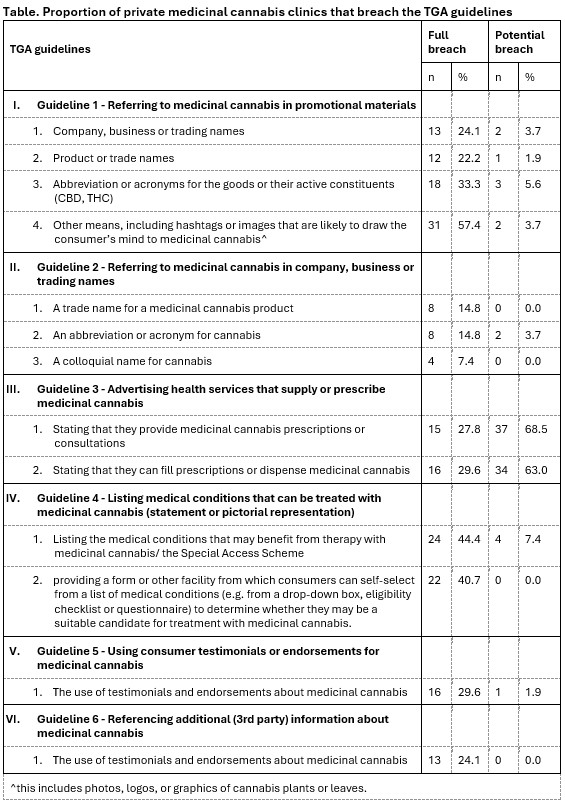
In this study, 54 clinics were evaluated against the TGA guidelines. Around 47% of the clinics were classified as being in “High Breach” by breaching at least 2 TGA guidelines (see Table). One of the most common breaches found was the use of vague or euphemistic language on their websites, such as “plant-based medicine” and “green, natural therapy” to subtly promote medicinal cannabis while avoiding explicit references that might overtly breach advertising regulations.
Many clinics also frequently made claims about the effectiveness of medicinal cannabis for a wide range of conditions, without any scientific basis. While there is limited evidence supporting its use in specific cases such as epilepsy, its purported benefits for conditions such as anxiety and multiple sclerosis are not well-supported by rigorous clinical trial findings.
Many clinics also offer same day or after-hours delivery, heavily discounted consultation fees for new customers, discreet shipping, and use patient testimonials. These strategies position access as fast, affordable, and hassle-free, more akin to ordering takeout than obtaining a regulated medical treatment.
In another paper submitted for peer-review, I have identified a growing number of private clinics running targeted ads on Facebook, Instagram, and Threads. Most of their targeted ads were aimed at users as young as 18. One company had more than 170 active ads running in just a single month. Some featured vague slogans like “We can’t shout about it, but our patients are smiling”, while others paired a well-known Australian sports figure with lines like “Move differently!” and a product name.
While these ads do not explicitly mention medicinal cannabis, they are clearly designed to spark curiosity and build brand familiarity especially among younger people. You might not even realise you were being targeted. That is what that makes this style of advertising so effective and so concerning.
What has been done and next steps
The Australian Health Practitioner Regulation Agency (AHPRA) recently announced it is going to crack down on unsafe prescribing practices. But this response does not go far enough.
What we need is a broader overhaul of the system, particularly one that addresses the digital marketing tactics used to promote medicinal cannabis to our younger audiences.
We would also like to see AHPRA and/or the TGA
- broaden their crackdown to include digital marketing and advertising practices used to target young people
- provide clear guidelines to medicinal cannabis clinics and prescribers on acceptable promotional practices
- support stronger consequences for repeat offenders, including prescribers who continue to engage in misleading advertising after being sanctioned.