Results previewed in The Conversation for a major international meeting and an article in the American Journal of Preventive Medicine.
Adolescent cannabis vaping trends (2021-2023): delta-9-tetrahydrocannabinol, cannabidiol, and synthetic cannabinoids
September 2025
Teaser image
Chung, J., Lim, C. C. W., Stjepanović, D., Hall, W., Connor, J. P., & Chan, G. C. K. (2025). Adolescent Cannabis Vaping Trends (2021–2023): Delta-9-Tetrahydrocannabinol, Cannabidiol, and Synthetic Cannabinoids. American Journal of Preventive Medicine, Article 107655. https://doi.org/10.1016/j.amepre.2025.107655
NCYSUR PhD candidate Mr Jack Chung led a study with NCYSUR colleagues on the types of cannabis compounds young people aged 11-18 were vaping in the US during 2021-2023.
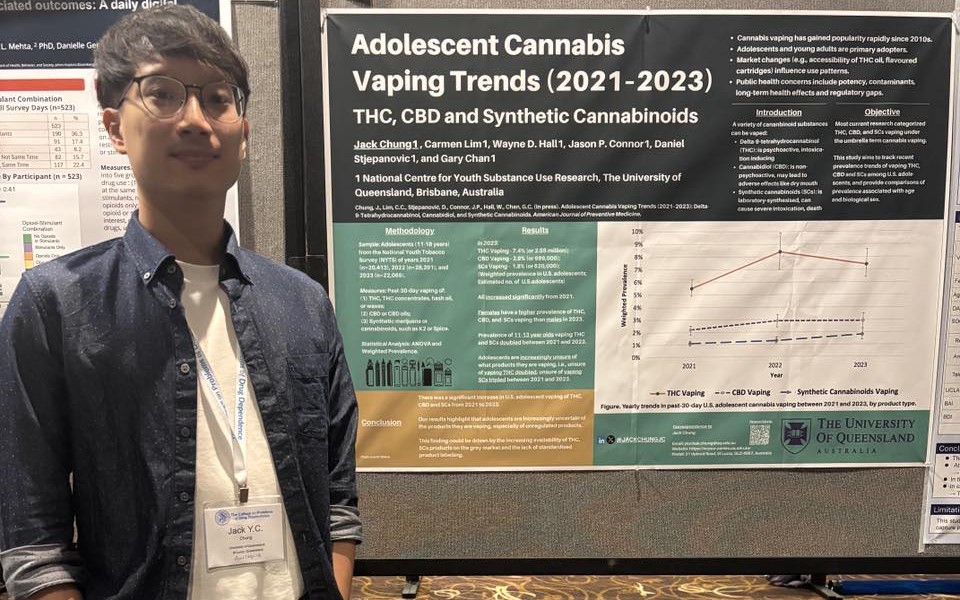
For this study, Chung and colleagues analysed data from 70,773 middle and high school students obtained from the US National Youth Tobacco Surveys to see how many teens were vaping two types of cannabis compounds, one of which is commonly used recreationally, and the other usually for medicinal purposes. The NYTS is a nationally representative survey that began collecting cannabis vaping data in 2021. Chung et al found an increase in use of all products between 2021 and 2023 as well as a concerning rise in the use of synthetic cannabinoids, where vaping doubled in young people aged between 11-15 years. Synthetic cannabinoids are particularly dangerous as they can lead to unpredictable health consequences and even death. Another worrying finding was an increase in adolescents reporting they were unsure about the substances they were vaping. In 2021, 1.8 % weren’t sure if they had vaped synthetic cannabinoids, increasing to 4.7 % in 2023.
Before heading to New Orleans in June to present his poster “Adolescent cannabis vaping trends (2021-2023)”, at the annual College on Problems of Drug Dependence, Mr Chung led The Conversation piece “What are ‘penjamins’? Disguised cannabis vapes are gaining popularity among young people” and was interviewed by the ABC, 7 News, and other media outlets to communicate his results to the public.
Read the Elsevier press release, the JAMA Medical News in Brief item, and the full paper in the American Journal of Preventive Medicine.